Why Radon in New Construction Deserves Your Attention Now
For years, the common assumption has been that new homes are safe from radon. After all, they are built with modern materials, up-to-date building codes, and tight windows. But the reality is more complicated. Radon in new construction is not a myth; it is a measurable risk that builders and homeowners in St. Louis and across the country have to take seriously. I have spent years in the field testing homes and installing mitigation systems, and I have seen plenty of brand-new houses with radon levels that would make you wince.
The problem starts with the soil. Radon is a radioactive gas that comes from the natural decay of uranium in the ground. It moves up through soil gas and can enter any building that sits on that ground, regardless of how new the building is. A freshly poured slab does not stop radon by itself. In fact, some new construction methods can actually create pathways for the gas to move indoors. That is why radon in new construction needs to be addressed before the foundation is even poured, not after the drywall goes up.
What Makes New Homes Vulnerable
Modern homes are built to be energy efficient. That means they are sealed tight, with minimal air leakage. While that is great for your heating and cooling bills, it also means that any radon entering the house has nowhere to go. It accumulates. Without a working radon mitigation system, a new home can easily have radon levels above the EPA action level of 4 pCi/L.
Another factor is the construction site itself. Builders often select lots based on location and price, not on soil geology. In the St. Louis area, the underlying bedrock and glacial deposits can produce significant radon. I have tested houses in the same subdivision where one home was fine and the neighbor had levels over 8 pCi/L. Radon does not follow neat property lines. That is why a pre-construction radon test is a smart investment, but it is still rare in most residential projects.
The Right Way to Handle Radon in New Construction
The best approach is to build with radon resistant construction from the start. This is not complicated or prohibitively expensive, but it requires planning. A typical package includes a layer of gravel base beneath the slab, a vapor barrier, and a network of PVC piping laid in the gravel before the concrete is poured. This is called a passive system. It relies on the natural pressure difference between the soil and the house to draw soil gas out through a pipe that vents through the roof.
Passive systems are required by many modern building codes, including those in parts of the St. Louis metro area. But here is the catch: a passive system is not always enough. It can reduce radon levels, but it rarely brings them below the EPA guideline on its own. That is why most codes also require that the passive system be designed so it can be converted to an active system later. An active system adds a radon fan to the vent pipe, which creates a vacuum under the slab. This method, called sub-slab depressurization, is the most effective way to reduce radon levels.
I have seen builders skip the fan installation to save money, and then a year later the homeowners call me because their post-mitigation test shows levels are still high. Retrofitting an active system into a house that was built with a passive system is straightforward if the PVC piping and the vapor barrier are already there. But if the builder skipped those steps too, the cost and disruption go up significantly.
Testing Is Not Optional
No matter how well you build, the only way to know if your home is safe is to test for radon. The EPA and the National Radon Program recommend testing every home, regardless of age. For new construction, the best time to run a radon test is after the house is fully finished and the HVAC system is running normally. A short-term test placed in the lowest livable level for 48 to 90 hours will give you a reliable reading.
If that test comes back high, you need a radon mitigation system. In new homes, the fix is often as simple as adding a fan to the existing passive vent pipe. That is why I always tell homeowners: ask your builder if the house has a passive system and if it is "fan-ready." If the answer is no, you may be looking at a more involved installation later, which could include sealing cracks in the slab, running new PVC piping, and cutting into finished walls.
What a Professional Installation Looks Like
When I install an active system in a new home, the process is clean and precise. The radon fan goes in the attic or outside, connected to the vent pipe. The pipe itself is usually run through an interior closet or garage wall so it does not freeze in winter. A manometer is installed on the pipe so the homeowner can see at a glance that the system is working. The manometer is a simple U-shaped tube with liquid in it; if the levels on both sides are even, the system is off or blocked. If they are uneven, the fan is pulling correctly.
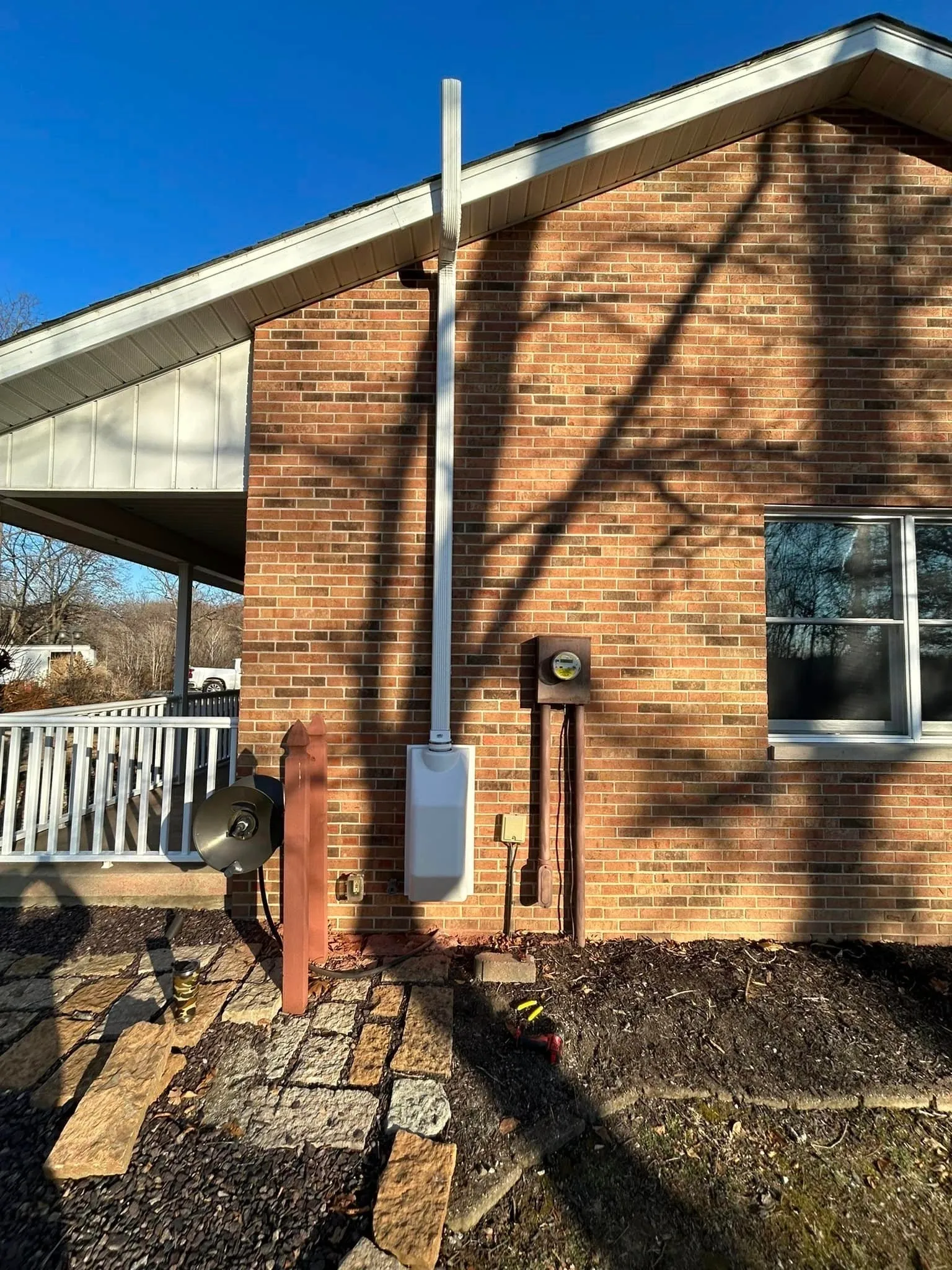
I also check for any gaps around plumbing penetrations, the sump pump, and the foundation edges. Sealing cracks is a critical part of any mitigation job, even in new construction. A tiny gap around a pipe can let in enough soil gas to keep the radon level high even with a fan running.
After the system is installed, I perform a post-mitigation test to confirm the levels have dropped. This is a standard part of the process for any reputable company like Air Sense Environmental. You should never accept a mitigation job that does not include a follow-up radon test.
The Role of Building Codes and Inspections
Building codes in many areas now require radon resistant construction in new homes. But code enforcement varies. Some jurisdictions do a thorough home inspection during construction, while others barely check. If you are building a custom home, you can request that the builder follow the EPA guide for radon resistant construction even if your local code does not require it. The cost is minimal compared to the peace of mind.
I also recommend that buyers of new construction homes hire their own home inspection company that specifically tests for radon. A general home inspector may not carry radon test kits or may not understand how to interpret the results. An independent radon test gives you a baseline you can trust.
Final Thoughts
Radon in new construction is a solvable problem, but it requires awareness and action. If you are building or buying a new home in St. Louis, make radon testing part of your plan. Ask about the radon mitigation system before you close. Check that the passive system is fan-ready and that a vapor barrier was installed under the slab. And if your test results are high, call a professional who can install an active system quickly and cleanly.
The good news is that modern radon resistant construction techniques work. With a gravel base, vapor barrier, PVC piping, and a radon fan, you can bring radon levels down to near zero. The bad news is that too many new homes still get built without these features. Do not assume your new house is safe. Test it. And if you are building, build it right from the start.